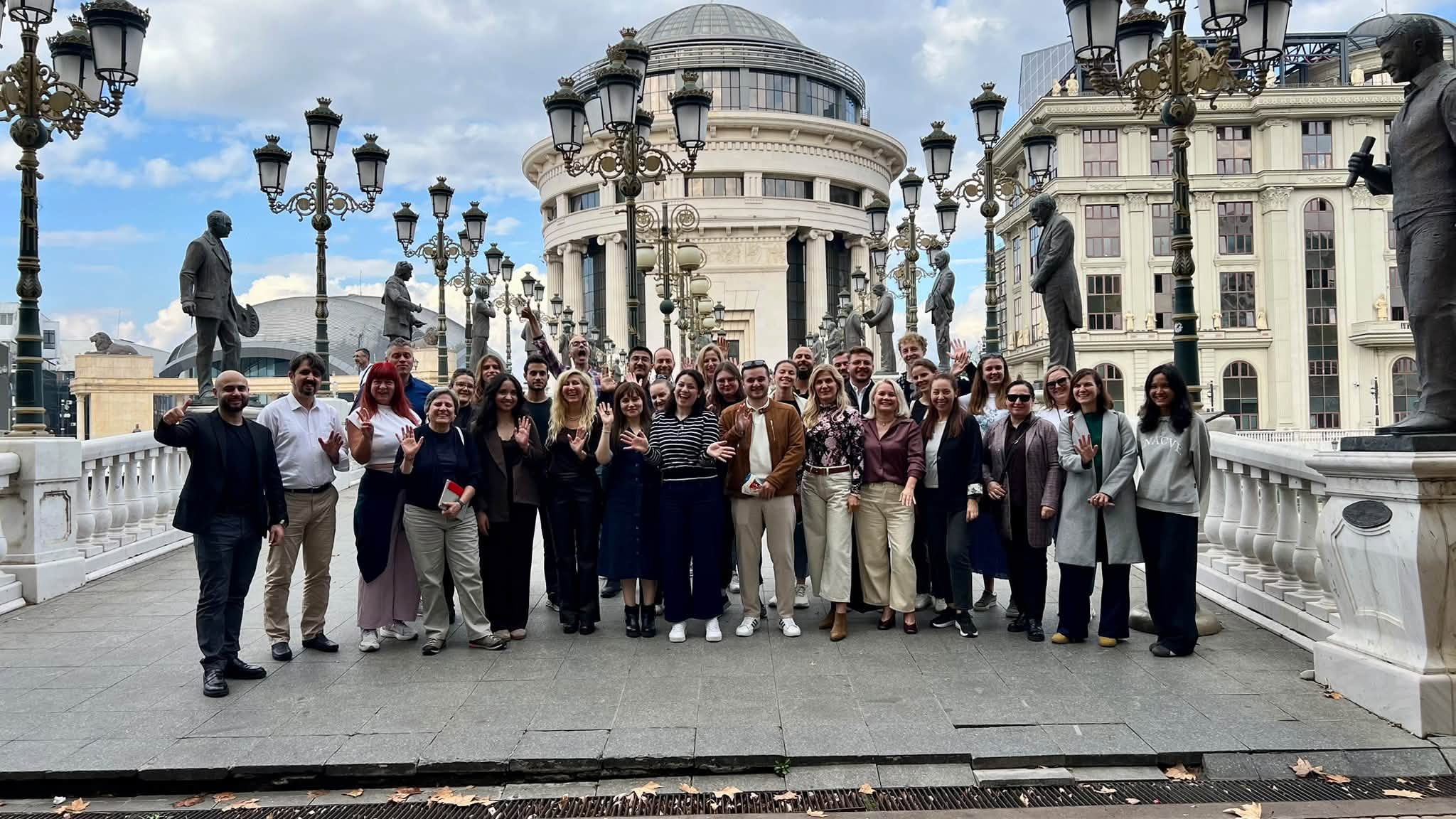
TCP Forum in Skopje: ARNO’s Keynote on the Local Dimension of Social Entrepreneurship and a Study Visit to “Nothing New”
From 19–22 October, Skopje welcomed the 9th “Towards Collaborative Practice” (TCP) Forum on Social Entrepreneurship and the Union of Skills. The four-day event gathered youth workers, educators, and changemakers from Erasmus+ Youth Programme regions and neighboring partner countries. Organized under the Youth@Work Partnership by the North Macedonian National Agency, together with co-organizers the Polish National Agency and SALTO Eastern Europe and Caucasus, the Forum combined official openings, keynotes, workshops, study visits, and networking sessions.
ARNO was at the heart of the programme in two ways.
A keynote on a sector still being born:
Irina Janevska, ARNO’s founder, took the stage as a keynote speaker with a message on grassroots impact economy and community-driven change. Drawing on the European Social Enterprise Monitor (ESEM) survey for North Macedonia, she painted a candid picture of a young sector: 53 enterprises identified, a median age of just five years, and environment and inclusion as the leading impact areas, with circular economy and youth engagement as key sub-themes. 92.5% of these enterprises are driven primarily by social and environmental purpose.
But the numbers also tell a story of fragility. The sector provides 362 jobs, only 153 of them full-time. “This is not a sector yet. This is a seed,” Irina said. “And seeds don’t grow without investment—not just grants, but skills, mentorship, and cross-sector partnership.”
That is where the call for impact investing comes in. Grants alone cannot sustain the sector, Irina argued: the shift must be from “bye bye grants” to “hello impact investment.” She placed this in a European context, noting that the EU’s social economy employs 11.5 million people, and that the European Commission’s mid-term review of the Social Economy Action Plan has already allocated €1.2 billion in guarantees, expected to mobilise €11.7 billion in investments—including pilots combining grants with repayable instruments. “The social economy is not charity,” she said. “It’s competitiveness. It’s resilience. It’s the future of inclusive growth.”
To show what this looks like in practice, Irina shared the story of eco-magician Kristijan Shopov, a former mainstream entertainer who rebranded his entire act around recycling and upcycling after winning ARNO’s green business competition. Following enthusiastic requests from participants, Kristijan made a surprise appearance at the Forum’s Living Library, sharing his journey in person.
A study visit to the repair center Nothing New:
The Forum’s study visits brought participants face to face with local initiatives — and ARNO’s “Nothing New” (Ништо ново) Repair Center was among them. Visitors explored the Skopje repair hub and saw how repair, reuse, and sharing turn everyday objects into entry points for conversations about waste, creativity, and sustainable choices that bring people together.
A second visit took participants to Marija’s rural retreat in Rankovce, home to more than 50 rescued animals and an inclusive, accessible space where animal welfare and human connection go hand in hand. Between curious goats and friendly donkeys, the group saw how care for animals and opportunities for people—including people with disabilities—form part of the same journey. The Countryside Ranch is an NGO that has taken part in several of ARNO’s capacity-building programmes and received a grant from ARNO.
Both visits grounded the Forum’s discussions on social entrepreneurship in the people and everyday choices behind each initiative.
From parallel workshops and the Union of Skills Marketplace to personal storytelling sessions, the Skopje Forum offered a concrete space for youth work and social entrepreneurship to exchange practical tools, challenge invisible barriers, and build lasting cross-border strategies.
A heartfelt thank you to the hosts, the North Macedonian National Agency, and co-organisers, the Polish National Agency for Erasmus+ and the European Solidarity Corps, for bringing everyone together within the Youth@Work Partnership.