.svg)
.svg)
EICEE Regional Conference “From Innovation to Impact”
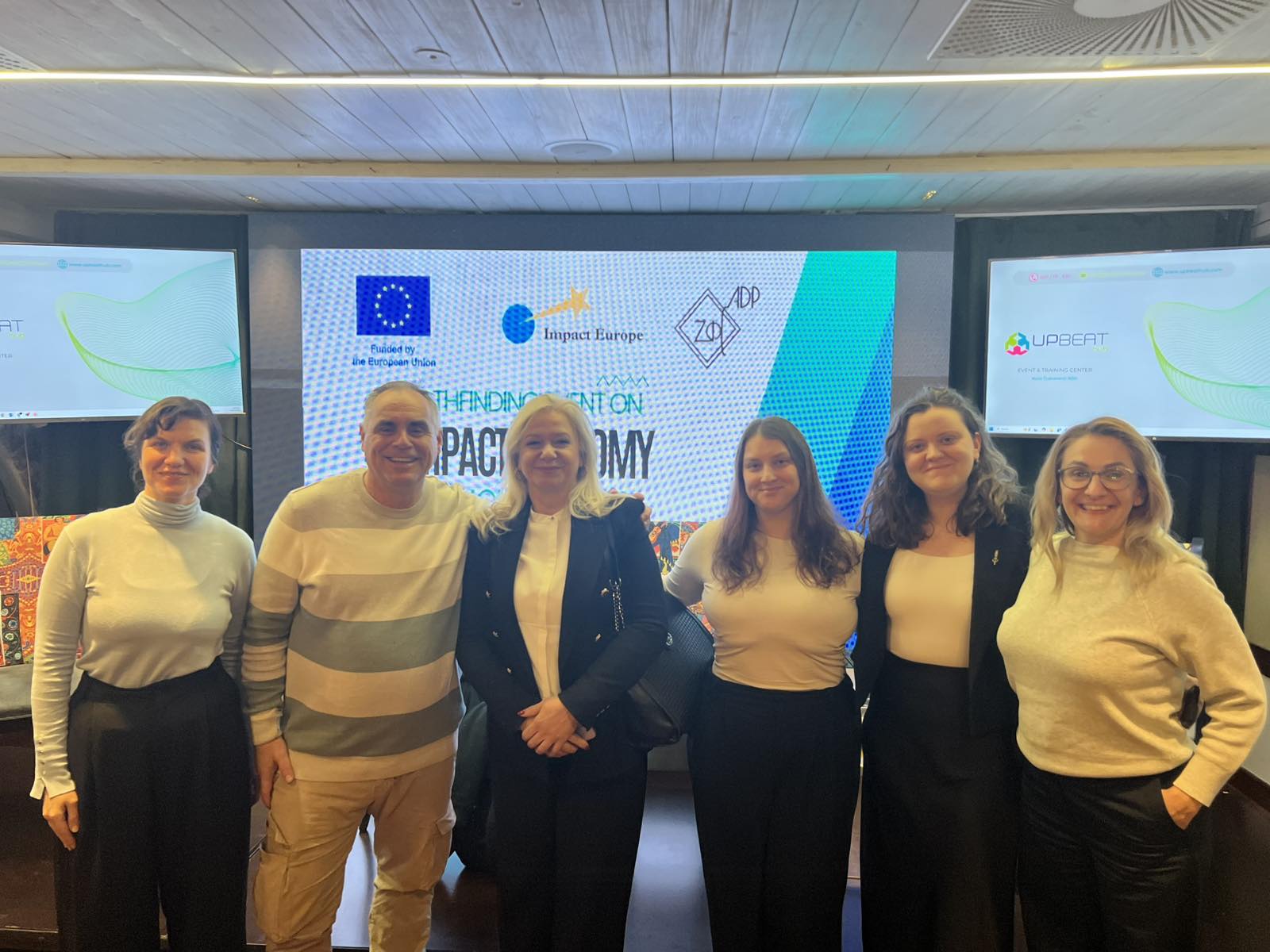
On 9 December 2025, ARNO joined partners, innovators, and policymakers from across the Western Balkans in Podgorica for the regional conference “From Innovation to Impact: Western Balkan Conference on Circular and Social Economy.” The event, hosted by ADP-Zid within the EICEE project (Western Balkan Eco Innovation and Circular Economy Ecosystem), brought together organizations committed to advancing green innovation, social economy models, and circular practices across the region. As representatives of North Macedonia, and as long-standing promoters of social innovation, ARNO contributed to discussions that showcased regional infrastructures, presented new solutions developed through the EICEE subgranting scheme, and strengthened cooperation on sustainability, social entrepreneurship, and green public procurement.
ARNO on Stage: Sharing the Story of the Repair Shop “Nothing New”
In the session dedicated to regional circular infrastructure, ARNO’s Irina Janevska presented the journey, results, and community impact of Repair Shop “Nothing New,” our makerspace established earlier this year. Since its opening in April, “Nothing New” has become a vibrant space where citizens repair, learn, share knowledge, and reconnect with the value of extending the life of everyday items.
The story of “Nothing New” was presented through numbers that illustrate the scale of interest and engagement.
“In 2025 alone, we organized 6 Open Days for textile repairs, 12 workshops for hand and machine sewing, 5 workshops for e-scooter repairs, 5 for bicycle repairs, and 7 dedicated to upcycling textiles. We held 1 Swap event, and 1 Open Day for institutions, embassies, and donors, bringing the total to 36 events—a mix of workshops, swap gatherings, and community repair days. The space welcomed around 550 visitors, supported over 160 repairs of textiles, bicycles, and e-scooters, and registered 1503 people interested in joining workshops—an overwhelming demand that shows how needed this service is and how eager citizens are to repair rather than discard. The media interest was great, there is no mornign show we havet been to, and social media numbers are skyrocketing, we had one post that went viral and was shared by 100+ people” shared Irina on stage.
Municipality Representative in Podgorica
ARNO was honoured to be accompanied by Elizabeta Janevska from Kisela Voda Municipality, the municipality that generously provided the free space for “Nothing New.” Her presence was important not only because of the municipality’s direct support, but also because she contributed to the panel on public procurement, sharing experiences from North Macedonia. The discussion emphasized how green and reserved public procurement mechanisms can drive the transition toward sustainable and inclusive economies across the Western Balkans. By integrating environmental and social criteria into procurement processes, municipalities and public institutions can stimulate circular innovation, support social enterprises, and promote the responsible use of public funds.
Innovation on Display: Green Products Created in the Western Balkans
One of the most inspiring parts of the conference was the showcase of innovations developed through the EICEE subgranting scheme. Organizations from Montenegro, Kosovo, Serbia, and North Macedonia presented prototypes and ideas that illustrated how targeted financial support can transform motivated concepts into practical, impactful solutions.
North Macedonia stood out with strong, future-focused contributions. JAVOR Zrnovci, presented by Blagojče Najdovski, introduced their innovative solar drone-based beekeeping solution, merging modern technology with traditional practices. Ekovita from Negotino, represented by Kristina Todorova, presented INNOHUB, designed to support green entrepreneurship and circular business development. Inno Tech Club, represented by Verica Jordanova, demonstrated their recycled filament for 3D printing—an exciting step forward for the regional maker community. These Macedonian innovations drew significant attention, reinforcing the country’s growing contribution to the Western Balkans’ circular transition.
The Science Promotion Foundation PRONA from Podgorica shared their initiative “Butt 2 Better: From Toxins to Innovations.” The Kosovo Advocacy and Development Centre (KADC) presented their efforts to empower young people and integrate circular practices into Prishtina’s ecosystem. Naša Kuća from Belgrade described their inclusive circular economy model, while the Private Forest Owners Association BOR from Užice showcased how a rural village can shift toward a circular model of development.
Connecting Agendas and Strengthening Regional Cooperation
Throughout the day, speakers and panelists explored European and regional frameworks for sustaining innovation ecosystems. They highlighted the need for policy alignment, the value of cross-border cooperation, and the importance of embedding social innovation into long-term strategies. A dedicated session on green and reserved public procurement offered practical insights into how public institutions can accelerate the green transition through their purchasing power, ensuring that public spending supports environmental responsibility and social-value creation.
Launching W Base: A New Regional Platform for Social and Solidarity Economy
The conference also marked the launch of W Base, the Western Balkan Platform for Social and Solidarity Economy. Building on the networks, tools, and infrastructures established through EICEE, W Base will serve as a shared resource for practitioners across the region—strengthening knowledge exchange, opening opportunities for joint projects, and lifting the visibility of social and circular innovations at the European level. For ARNO, W Base represents a meaningful next step in advancing regional cooperation and collective impact.
Looking Forward
The EICEE project has played a significant role in shaping the circular economy landscape of the Western Balkans—opening makerspaces, empowering communities, and encouraging more sustainable ways of living. For ARNO, the conference reaffirmed the power of partnerships, and especially the importance of supportive local institutions like Kisela Voda Municipality, which helped turn “Nothing New” from an idea into a real, accessible public space.
We return from Podgorica inspired, encouraged, and more committed than ever to building a circular, inclusive, and socially just region.